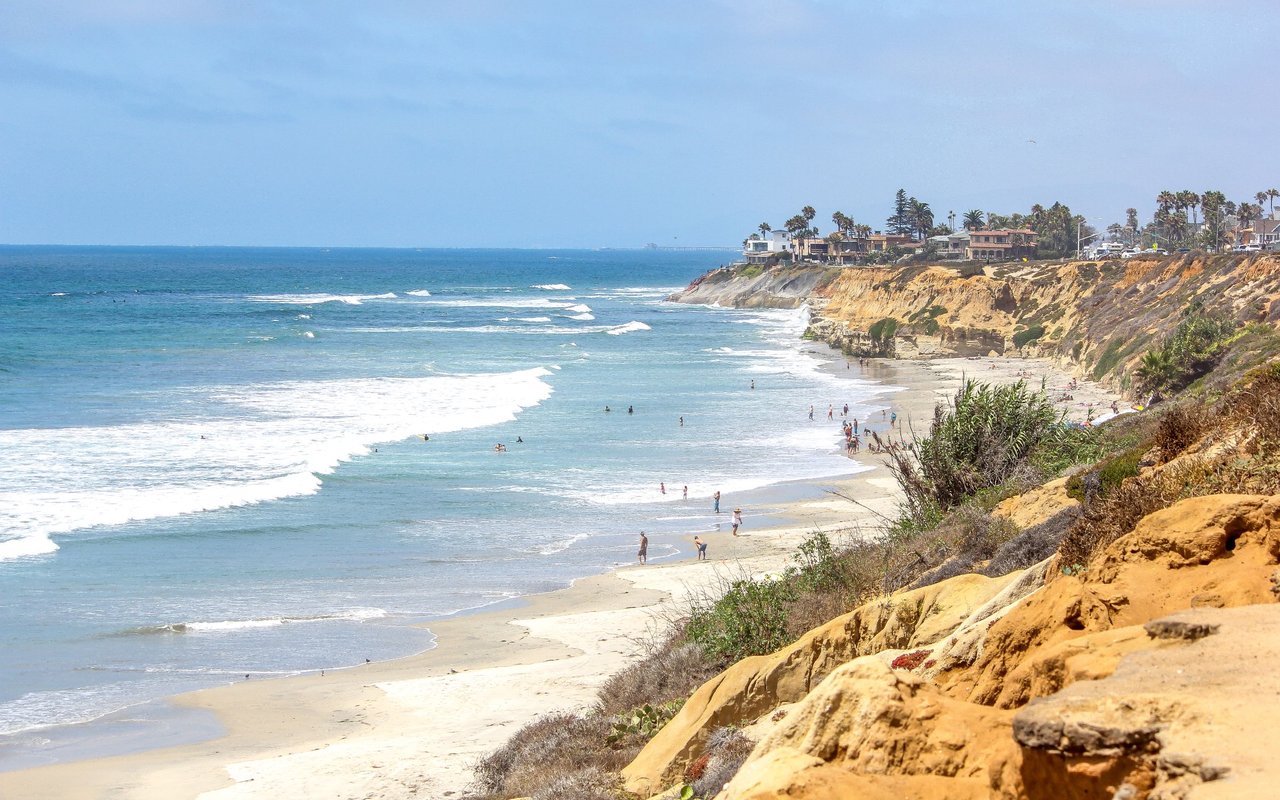
Two buyers walk into the same weekend of open houses. One tours a three-bedroom ranch a five-minute walk from Laurel Street. The other tours a larger, newer home in the hills west of Alameda de las Pulgas with a bay view from the deck. On paper the hillside home looks like the better deal per square foot. By the time offers are due, the flat lot has cleared list by six figures and the hillside listing is asking for a price reduction. Nothing about that pattern is random.
For most of the last three decades, west of Alameda meant premium. Larger lots, newer construction, sweeping views, quick access to 280. The map worked because scarcity worked: the hills had the finite thing everyone wanted. In 2026, the finite thing has quietly changed. What is scarce now is a flat, walkable block near a working downtown, and San Carlos has repriced accordingly. If you are comparing pockets right now, the traditional shortcut of "west costs more" will steer you wrong.
Lead with the friction, not the view
Before we talk price, talk transaction. A hillside purchase in San Carlos carries a set of contingencies that a flat purchase does not, and they surface late enough in the process to blow up a deal. Local buyer guides consistently flag the same list for west-of-Alameda offers: geotechnical review, engineered foundations, drainage and slope management, retaining wall condition and permit history, wildfire hazard designation and the insurance quotes that follow from it, driveway grade for construction access, and confirmation of any past permitted work on the lot.
None of these are theoretical. Hillside pockets like Beverly Terrace, parts of Brittan Acres, and the upper reaches of El Sereno sit on terrain that starts climbing quickly west of Alameda de las Pulgas, with elevations reaching roughly 200 to 400 feet on the western slopes. That terrain is why the views exist. It is also why an underwriter may want a fresh geotech letter, why a retaining wall built in the 1970s can become a repair credit, and why a wildfire-zone insurance quote can arrive two weeks into escrow at a number that changes your monthly payment.
Flats buyers face a different friction list: older housing stock from the 1930s and 40s, smaller lots on a tight grid, and, closer to the bay, questions about long-term flood and sea-level exposure. The friction is real, but it tends to be legible earlier in the tour. You can walk a flat lot and see what you are buying. A hillside lot often requires a specialist to tell you what you are buying.
The number that surprises most buyers
Here is the fact that reorders the search. Howard Park, a flat neighborhood bounded roughly by Brittan, El Camino, Alameda de las Pulgas, and San Carlos Avenue, passed White Oaks in the early 2010s as the city's highest price-per-square-foot neighborhood and has held that position since. Neither of those pockets is in the hills. Both sit on the flats, walking distance to Laurel Street and Burton Park.
Meanwhile, the citywide numbers are strong across the board. Redfin's data shows an average San Carlos house price of about $2.53M last month, with a three-month median through May 2026 of roughly $2.7M, up 10.8% year over year, and homes selling in about 12 days. PropertyShark put the Q1 2026 single-family median at $2.9M, essentially flat year over year, with condos up 10.9% to a $1M median. The White Oaks Blog's 1H 2026 recap reports that new single-family listings hit their highest level in five years, that 140 homes changed hands through early July with only 17 percent all-cash, and that mortgage-driven demand held up against 30-year rates hovering between 6.65 and 6.75 percent in late July.
Strong is not the same as uniform. Well-presented inventory in White Oaks and Howard Park has been closing in 10 to 18 days at list-to-sale ratios that routinely clear 105 percent on the right presentation. Hillside inventory in El Sereno and Brittan Acres has been running 20 to 30 days on market, with strong ratios only when the right buyer surfaces. Same city, two tempos.
What the flats are actually pricing
The Laurel Street walkability premium is the single largest structural change in San Carlos pricing over the past decade. The mix of restaurants and independent retail along Laurel, the concentration of coffee and grocery within a five-block radius, the San Carlos Caltrain station one block west of downtown, Burton Park at the north edge, and the Beresford Square development near the tracks have turned downtown-adjacent inventory into a category of its own.
Watch how that shows up in listing ranges rather than city medians. Loqol's April 2026 breakdown put single-family homes near Laurel Street in the $2.3M to $3.2M range, with downtown condos and townhomes at $950K to $1.6M. Hillside El Sereno standard single-family ran $2.1M to $2.9M, with view-exposed properties clearing $3M and above but with slower days on market. Devonshire, flat but east of El Camino, ran $1.8M to $2.4M, a modest discount for a quieter residential feel with slightly less immediate walkability. Walk Score rates White Oaks at 58 out of 100, which sounds moderate on paper and turns out to be enough to make it the city's fourth-most-walkable neighborhood, a reminder that Peninsula walkability is graded on its own curve.
The hills used to price the view. The flats now price the errand. Both are premiums, but only one of them is compounding.
A working comparison for the pockets that matter
| Broad character | 2026 typical range | Tempo signal | |
|---|---|---|---|
| Howard Park | Flat, post-WWII ranches on roughly 5,000 sq ft lots, closest to Laurel and Burton Park | Top city price-per-square-foot | 10 to 18 days, ratios often above list |
| White Oaks | Flat, mixed housing stock from bungalows to modern rebuilds, strong local identity | Comparable to Howard Park | 10 to 18 days, list-to-sale often 105%+ |
| El Sereno | Adjacent to White Oaks with elevation change, more privacy | Roughly $2.1M to $2.9M, view lots $3M+ | 20 to 30 days |
| Beverly Terrace | Hilly, larger lots, bay and western views, near Highland Park | Wide dispersion by view and condition | Slower, view-dependent |
| Alder Manor | West of Alameda, larger lots; some addresses fall in Redwood City with Redwood City School District zoning | Higher on lot size, verify by exact address | Address-specific |
| Devonshire | Flat, east of El Camino, quieter residential | Roughly $1.8M to $2.4M | Steady, less bidding pressure |
| Clearfield Park | Flat, historically the more affordable pocket, adjacent to the life-sciences corridor | Below city median | Faster movement on renovated stock |
Two of these lines matter more than they look. Alder Manor's Redwood City addressing and school district assignment catches buyers off guard because the map does not match the mailing address, and school assignments in San Carlos are not identical to city boundaries. Any offer in that pocket should confirm the district by exact address, not by street or by realtor talking point. Clearfield Park's proximity to the Laurel corridor and the Caltrain station has quietly compressed the affordability gap that used to define it.
What the hills still win on
None of this means the hills are a bad buy. West-of-Alameda pockets still deliver the things they always delivered: larger lots, newer construction, more architectural variety, real privacy, and quick access to 280. If your daily routine points south down the Peninsula rather than into downtown or onto Caltrain, the hills often solve for commute better than the flats do. If you want a lot with room for a real garden or an addition, the hills give you more starting material.
The trade you are actually making is between a walkable errand radius and a private lot. Both are real. Neither is universally better. What has changed is that the market is no longer treating the private lot as automatically more valuable per square foot. Pricing your offer against comps in the correct half of the city matters more than it did five years ago.
How this changes an offer strategy
For flats offers, expect competition and price the pre-inspection package accordingly. Sellers on Howard Park and White Oaks streets who invest in a clean pre-listing report, staging, and photography routinely see the reward in list-to-sale ratio. Buyers should assume that the neighborhood is doing part of the selling, which means the seller has less need to negotiate on minor items.
For hills offers, the leverage sits with the buyer who has done the technical homework. Ask for prior geotech and soils reports, permits for retaining walls and additions, and any drainage or slope-stability documentation. Get an insurance quote in writing before removing contingencies. On a $2.5M-plus purchase, the difference between a standard homeowner policy and a wildfire-zone policy can equal a meaningful renovation budget over a decade.
A short FAQ
Are the hills actually cheaper per square foot, or does it depend on the pocket? It depends on the pocket, but the pattern is real. Howard Park and White Oaks have led the city on price per square foot since the early 2010s, and hillside comparables often show a lower figure on a same-condition basis. Total price can still be higher in the hills because the homes and lots are larger.
Does the walkability premium hold if I only walk to downtown on weekends? The premium is priced by the market whether or not you use it every day. If you know you will not use it, buying it means paying for something you do not need. That is a legitimate reason to look at Devonshire or Clearfield Park before the west side.
Is there any pocket where the traditional map still applies? Alder Manor comes closest. Larger lots and west-of-Alameda location still translate to higher totals, though the Redwood City addressing and school district assignment on some streets is the more important underwriting detail.
What should I ask about first on a hillside offer? Retaining walls, drainage, and insurance. Every other hillside contingency flows from those three.
If you are weighing a specific block against another, or trying to decide whether the walkable half of San Carlos or the private half fits your next ten years better, Debbie Livingston can walk the pockets with you and price the tradeoff against your actual search. Let's Connect — Start Your Home Search or Get a Free Home Valuation.